The businesses I enjoy working with most aren't trying to become something they're not. They've already built exceptional businesses. My role is to make sure the market sees a business as clearly as its capabilities deserve.
When Your Business Outgrows Its Brand
Successful businesses don't outgrow their capability overnight. They outgrow the way they're perceived.
One of the biggest misconceptions about rebranding is that it begins with a logo.
In my experience, it almost never does.
After more than a decade of working alongside founders and leadership teams, I've found that businesses rarely come to me because they genuinely need a new visual identity. They come because something feels out of alignment. Their website no longer reflects the calibre of the organisation. Their messaging doesn't sound like the conversations they're having with clients. The photography belongs to another chapter. The business has evolved, but the brand hasn't evolved with it.
Those things are real, but they're symptoms rather than the problem itself.
Businesses are living organisations. They grow through experience, through people, through hard decisions and through years of delivering exceptional work. Capability deepens. Confidence grows. New services emerge. Better opportunities arrive. What began as a small business slowly becomes something far more sophisticated.
The brand often doesn't make that journey at the same pace.
Eventually, the business everyone experiences internally is no longer the business the market experiences externally.
That's when the gap begins to matter.
When Capability Outgrows Perception
Founders usually notice it before anyone else.
The enquiries no longer reflect the calibre of work they're capable of delivering. Prospective clients underestimate the depth of expertise within the business. The team continually has to explain who they are, what they do and why they're different because the brand isn't doing enough of that work for them.
Nothing is fundamentally wrong.
The business has simply become more capable than the story it's telling.
This isn't a failure of branding.
It's a natural consequence of growth.
Every successful business reaches this point eventually.
The question isn't whether it will happen.
The question is what you choose to do when it does.
A Rebrand Should Reveal, Not Reinvent
This is why I've never believed a rebrand is about making a business look different.
It's about ensuring the market sees the business for what it has already become.
The strongest rebrands aren't acts of reinvention.
They're acts of recognition.
Before a single design decision is made, I want to understand how the business has evolved. What clients value today. Which strengths have become so familiar internally that nobody thinks to talk about them anymore. What the founders see when they imagine the future.
Only then does creativity have something meaningful to express.
Design, photography, messaging and digital experiences become the visible expression of something that already exists.
They're no longer trying to create credibility.
They're communicating credibility that has already been earned.
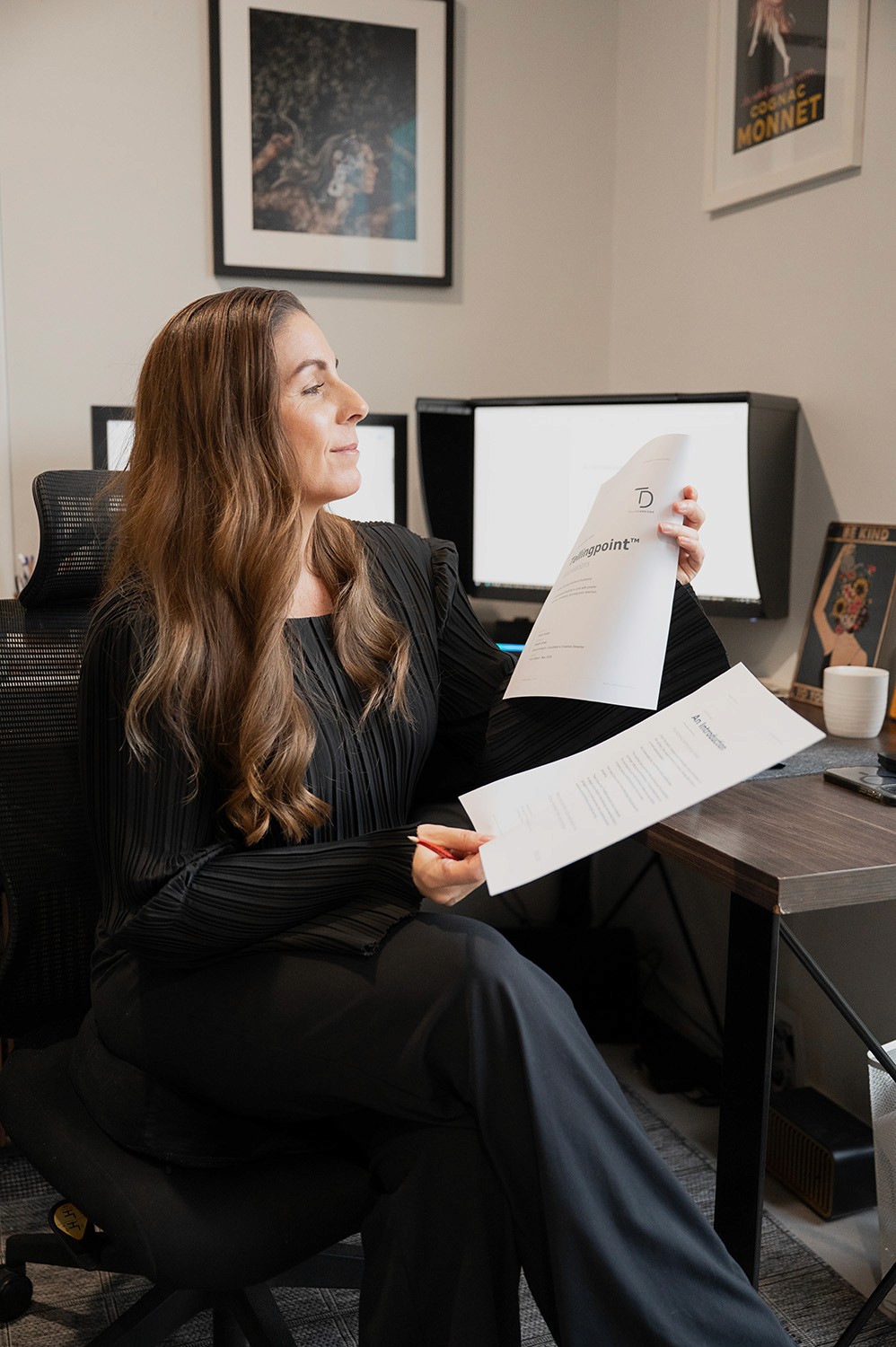
The Businesses I Love Working With
People often ask who my ideal clients are, and the answer has very little to do with industry, turnover or company size. I've worked with businesses at very different stages of their journey, from founders building something entirely new to established organisations that have spent decades earning their reputation. What connects them isn't their size; it's their ambition and their willingness to think strategically about the future.
The businesses I find most rewarding to work with already care deeply about what they do. They have built genuine capability through years of experience, invested in exceptional people and developed expertise that sets them apart. They aren't looking for branding to manufacture credibility or create the illusion of success. They have already done the hard work. What they need is a brand capable of expressing the quality, thinking and ambition that already exists within the business.
That's a very different conversation to simply redesigning a logo or rebuilding a website. It's about uncovering what has changed, recognising the strengths that have become so familiar they're often overlooked, and creating a brand that reflects the business as it stands today—not as it looked five years ago or as it hopes to be five years from now.
A Brand Is Never Finished
One of the biggest shifts in my own thinking over the years has been moving away from the idea that branding is a project with a finish line. Businesses don't stop changing because a website has launched or a new identity has been rolled out. They continue to grow, adapt and respond to the world around them. New services are introduced, leadership evolves, teams expand, markets shift and priorities change. Every one of those changes subtly influences the way the business should be understood.
That's why I've come to think of a brand as a living part of the business rather than a collection of creative assets. Like the business itself, it needs care, attention and the occasional course correction. Not because something has gone wrong, but because healthy businesses are constantly evolving.
I've seen firsthand how small, considered refinements made over time can prevent the need for dramatic reinvention later. A clearer message here, new photography there, a refined digital experience or a subtle adjustment in positioning may seem insignificant on their own, but over time those decisions accumulate. The brand stays aligned with the business, and that consistency builds trust in a way no single rebrand ever could.
Why Long-Term Partnerships Matter
Perhaps that's why I've never been particularly interested in transactional projects. Of course, every relationship starts somewhere, but I've found that the greatest value rarely comes from the launch itself. It comes from everything that happens afterwards.
The longer I work alongside a business, the more context I gain. I understand why certain decisions were made, what challenges have already been overcome and where the founders are trying to take the business next. That understanding changes the nature of the relationship. Conversations become less about individual deliverables and more about protecting the integrity of the brand as new opportunities emerge.
Over time I become someone who remembers the reasoning behind decisions that might otherwise be forgotten. Someone who notices when the business has evolved enough that the story needs refining again. Someone who can challenge an idea because I understand not just the brief, but the business itself.
That perspective can't be recreated every time a company appoints a new agency. It's something that develops gradually through trust, continuity and shared experience.
More Than Creative
Founders carry an extraordinary amount of responsibility. They make decisions every day that affect employees, clients and the future of the business they've worked so hard to build. From the outside, success often looks effortless. From the inside, it can feel surprisingly isolating.
I've never seen my role as simply delivering creative work. Sometimes I'm facilitating strategic conversations or directing a photography campaign. Other times I'm listening while a founder works through an idea they've been carrying for months, offering another perspective or asking a question that changes the direction of the conversation entirely.
Those moments don't appear in a proposal and they don't fit neatly into a list of services, yet they're often the moments clients remember most. They happen because trust has been built over time. They happen because the relationship has moved beyond supplier and client into something much more collaborative.
I don't pretend to have all the answers, but I do believe every founder deserves someone in their corner who understands both the business they've built and the business they're trying to become.
Every Decision Compounds
I've always been fascinated by the idea of compounding. We usually think of it in financial terms, but I believe exactly the same principle applies to branding.
Very few decisions transform a business overnight. More often, it's the accumulation of thoughtful decisions made consistently over many years that creates meaningful change. A clearer message, stronger photography, more confident positioning, better digital experiences and a commitment to consistency may seem incremental in isolation, yet together they shape the way a business is recognised and remembered.
That's why governance matters to me. Not governance as a corporate process, but as a way of protecting the integrity of the brand over time. It provides a framework for making decisions that build upon one another rather than pulling the business in different directions.
When every decision is made with intention, trust grows. Reputation strengthens. Recognition increases. Opportunities improve. The value isn't created by any one decision—it's created by all of them working together.
So, What Do You Do?
It's still one of the hardest questions I get asked, largely because the simplest answer has never felt like the most truthful one.
I usually tell people I'm a brand designer and photographer because it's familiar, concise and easy to understand. It's also true.
It just isn't the whole story.
The longer answer is that I work with founders and businesses at moments of change. Sometimes that's helping a startup establish the foundations it will grow into. Sometimes it's helping an established business realign its brand with the reputation it has already earned. Sometimes it's staying alongside that business for years as it continues to evolve.
Whatever stage a business is at, my role is always the same: to ensure the way it's understood keeps pace with the business itself.
FAQ
Continue Reading
More articles you may find useful, carefully selected from our journal